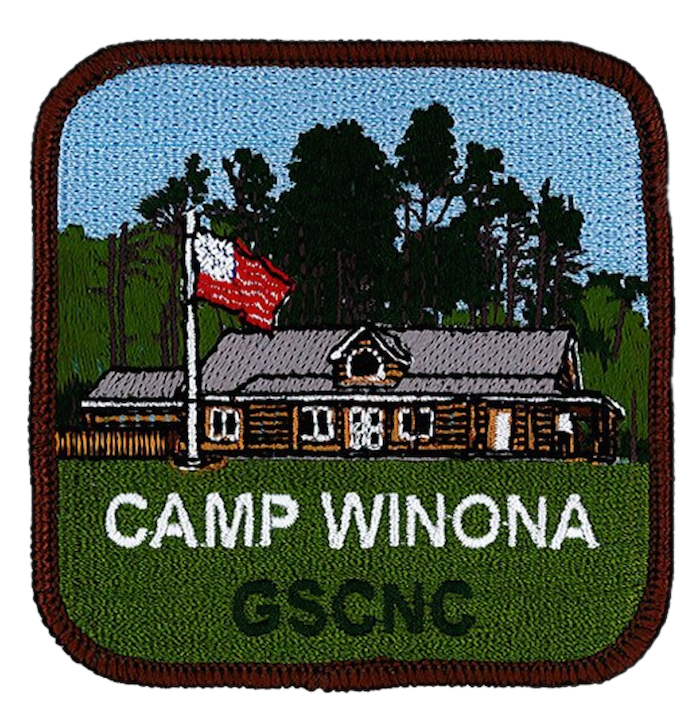
Seventy years ago, on September 16, 1956, the Girl Scout Council of Prince George’s County dedicated their new resident camp in Hughesville, Maryland.

Shifting Council Borders
Girl Scouts in the Washington DC region began when the first troop was established in 1913. The Washington DC Girl Scout Council was chartered in 1917.
As the movement grew in the Nation’s Capital, officials decided it would be more efficient to break into individual, self-governing councils for each surrounding county.
Prince George’s County, Maryland, was the first to separate in 1935. Its name changed to Girl Scouts of Southern Maryland when St. Mary’s County joined the council in 1957.


Charles and Calvert County Girl Scouts joined the Southern Maryland council in 1961, but the council name did not change.
Charles and Calvert County Girl Scouts joined the Southern Maryland council in 1961, but the council name did not change.

By 1963, national and local Girl Scout officials reversed course and decided that reuniting the counties into one council would be more efficient–and end the continuing problem of competing cookie sales.
So Southern Maryland; Northern Virginia; Alexandria, Virginia; Arlington, Virginia; and the National Capital Girl Scout Council (Washington DC + Montgomery County, Maryland) came together as the Nation’s Capital Girl Scout Council.
One further name change came in 2006. As part of the national realignment and renaming program, Nation’s Capital Girl Scout Council became the Girl Scout Council of the Nation’s Capital?
Why? So people looking in phone books for “Girl Scouts” would be able to find their local council. (Who remembers phone books?)
Back to 1956–The Hughesville Camp
When the new 178-acre resident Girl Scout camp opened 70 years ago, it was still known as “the Hughesville Camp.”
Several names were proposed for the new camp, including Stony Hill, Catch as Catch Can and Jennifer Farm, before settling on Winona, a Native American name reportedly meaning “first-born daughter.”


Troop 9 was the first to camp there.

Today, Camp Winona remains an active, year-around camp for the Girl Scouts of the Nation’s Capital.

It was extensively renovated following a tornado in 2002 and now hosts more than 1,000 girls each summer.
Who’s been to Camp Winona? I would love to have more photos!
© 2026 Ann Robertson, writer, editor, Girl Scout historian, but NOT a Girl Scout employee.

Leave a Reply